
In today's global food industry, consumers are becoming increasingly interested in natural ingredients, transparent sourcing, and sustainable food production. As a result, coconut sugar has gained attention among food manufacturers, distributors, and health-conscious consumers looking for alternatives to conventional refined sugar.
However, behind every quality coconut sugar product lies an important factor that international buyers should never overlook: its country of origin.
Understanding where coconut sugar comes from is not simply about identifying its geographical source. It is about ensuring product authenticity, supply chain transparency, consistent quality, and responsible international trade. For importers sourcing coconut sugar from Indonesia, proper documentation plays a vital role in building confidence and establishing long-term business relationships.
Understanding Coconut Sugar: A Natural Sweetener from Indonesia
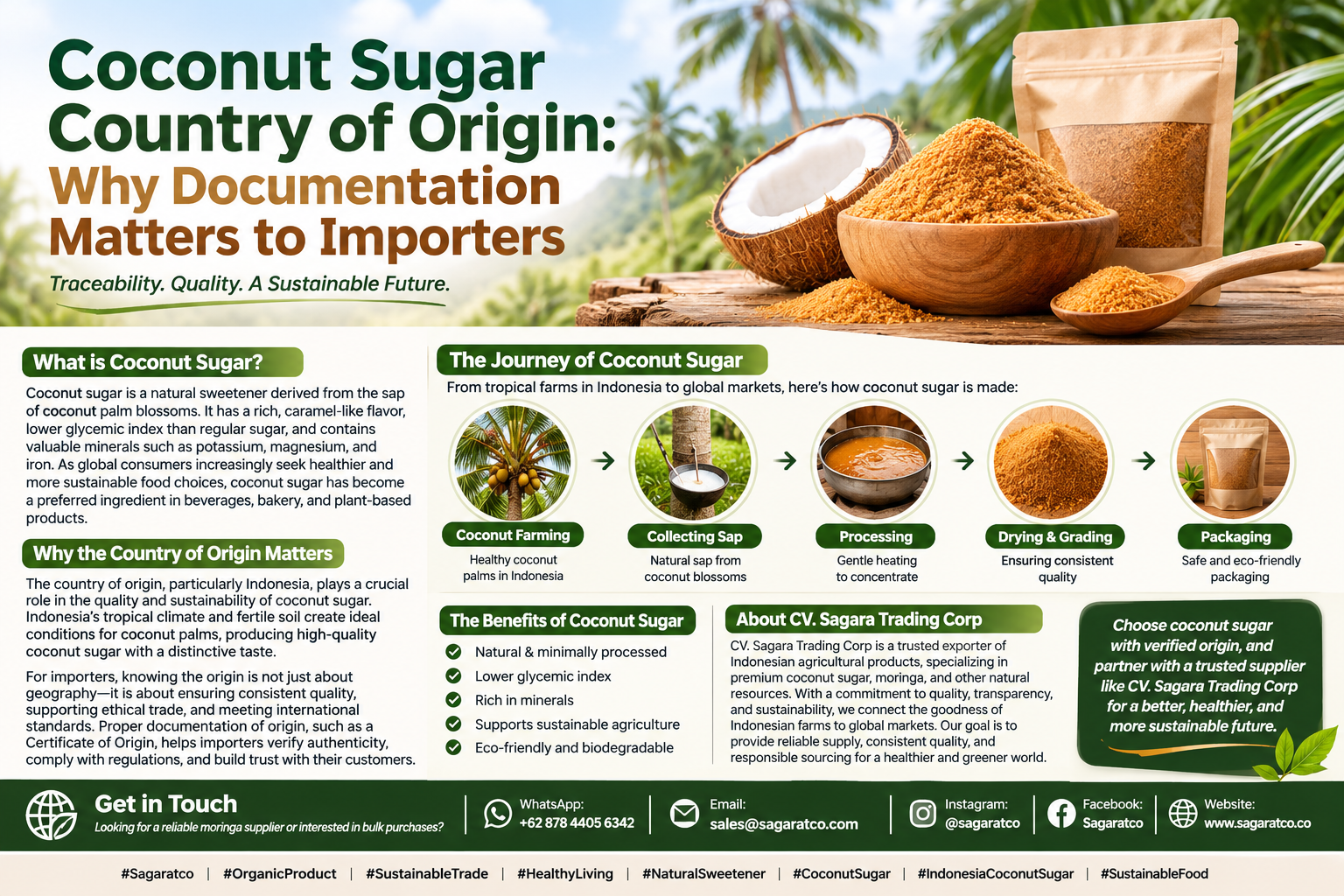
Coconut sugar is a natural sweetener produced from the sap of coconut palm blossoms (Cocos nucifera). Unlike conventional refined sugar, which is commonly extracted from sugarcane or sugar beets, coconut sugar comes from the naturally occurring nectar collected from coconut flower stalks.
Its distinctive golden-brown color, pleasant caramel aroma, and rich flavor make it a versatile ingredient in modern food applications.
How Is Coconut Sugar Produced?
The production process begins with skilled farmers collecting fresh sap from coconut flower blossoms. The sap is then filtered and gently heated to reduce its water content until it reaches a concentrated consistency.
Afterward, the concentrated sap is processed into granules or powder, cooled, graded, and packaged for distribution.
The main production stages include:
-
Coconut Sap Collection: Farmers carefully collect fresh nectar from coconut blossoms.
-
Filtration: The collected sap is filtered to remove unwanted particles.
-
Heating and Concentration: Controlled heating reduces moisture and develops the characteristic caramel flavor.
-
Drying and Granulation: The concentrated material is processed into granules or powder.
-
Quality Control and Packaging: The finished coconut sugar is inspected and packed according to buyer requirements.
This traditional production knowledge, combined with appropriate quality control, helps create the distinctive characteristics of Indonesian coconut sugar.
Why Indonesia Is an Important Origin for Coconut Sugar
Indonesia is one of the world's important coconut-producing countries, supported by its tropical climate, fertile agricultural regions, and established coconut farming communities.
Across different Indonesian regions, coconut farmers have developed generations of experience in collecting coconut sap and producing traditional coconut sugar.
Indonesian coconut sugar is appreciated for its natural caramel-like flavor, versatile applications, and connection to traditional agricultural practices.
For international buyers, sourcing coconut sugar from Indonesia also creates opportunities to work with agricultural suppliers connected to established farming communities.
Coconut Sugar in the Global Food Industry
Coconut sugar is increasingly explored in several food applications, including:
-
Bakery products, cookies, and confectionery.
-
Coffee, tea, and specialty beverages.
-
Chocolate and dessert formulations.
-
Sauces, marinades, and savory seasonings.
-
Plant-based and natural food products.
Its distinctive flavor profile makes it particularly interesting for manufacturers seeking alternative sweetening ingredients.
Although coconut sugar contains certain naturally occurring minerals, it remains an added sugar and should be consumed in moderation. It should not automatically be considered a low-glycemic or healthier substitute for conventional sugar.
Why Country of Origin Documentation Matters to Importers
When purchasing coconut sugar internationally, buyers need more than an attractive product description. They need reliable information confirming where the product originates and whether the shipment meets applicable import requirements.
Country of origin documentation provides an important foundation for international trade.
1. Product Authenticity and Traceability
A Certificate of Origin (COO) helps establish the declared country of origin of exported coconut sugar.
For importers, this document supports verification of product origin and helps maintain transparency throughout the supply chain.
2. Customs Clearance and Trade Compliance
Import regulations differ between countries. Customs authorities may require specific documentation to determine applicable duties, tariff preferences, and import eligibility.
Depending on the destination market, relevant documents may include:
-
Certificate of Origin (COO).
-
Commercial Invoice.
-
Packing List.
-
Bill of Lading.
-
Certificate of Analysis (COA).
-
Health or phytosanitary documentation, where applicable.
-
Organic certification, when the product is marketed as certified organic.
Importers should always confirm the exact requirements with their customs brokers and relevant authorities.
3. Quality Assurance and Buyer Confidence
A Certificate of Analysis can provide important information about product specifications, such as moisture content, color, microbiological parameters, and other agreed quality indicators.
Together with traceability records, these documents help buyers evaluate product consistency and establish confidence in their suppliers.
4. Supporting Sustainable and Responsible Trade
Today's international buyers increasingly consider the social and environmental aspects of agricultural sourcing.
Transparent documentation helps businesses understand their supply chains, evaluate sourcing practices, and develop more responsible purchasing strategies.
For coconut sugar importers, this means looking beyond price and considering the people, agricultural practices, and production processes behind the product.
Choosing a Reliable Indonesian Coconut Sugar Supplier
Selecting the right supplier is essential for maintaining a stable international supply chain.
Importers and distributors should evaluate several factors before entering a purchasing agreement:
-
Clear country of origin information.
-
Consistent product specifications.
-
Appropriate export documentation.
-
Transparent communication.
-
Reliable production and supply capacity.
-
Packaging options suitable for international shipping.
-
Organic certification when specifically required.
A professional supplier understands that international business is built on more than transactions. It requires consistency, accountability, and long-term cooperation.
Get to Know CV. Sagara Trading Corp
CV. Sagara Trading Corp is an Indonesian coconut sugar trading and export company focused on connecting the quality and potential of Indonesia's natural resources with international markets.
Our product portfolio includes organic and conventional coconut sugar, moringa powder, and coconut water concentrate, serving the interests of international buyers seeking Indonesian agricultural ingredients.
We believe that successful international trade begins with three essential principles: quality, transparency, and sustainability.
Through our sourcing network and commitment to professional business relationships, we aim to provide international importers, distributors, wholesalers, and food manufacturers with reliable access to Indonesian agricultural products.
For us, coconut sugar represents more than a natural sweetener. It reflects the dedication of local farmers, traditional agricultural knowledge, and the opportunity to introduce Indonesia's agricultural potential to the world.
CV. Sagara Trading Corp — Connecting Indonesian Agricultural Excellence with Global Markets.
Get in Touch CV. Sagara Trading Corp
Looking for a reliable Indonesian coconut sugar supplier or interested in bulk purchases? Let's discuss your sourcing requirements and explore potential business cooperation.
CV. Sagara Trading Corp
-
WhatsApp: +62 878 4405 6342
-
Email: sales@sagaratco.com
-
Instagram: @sagaratco
-
Facebook: Sagaratco
-
Website: https://www.sagaratco.com
From Indonesia to the World. Quality, Transparency, and Sustainable Trade.
#Sagaratco #CoconutSugar #IndonesiaCoconutSugar #CoconutSugarSupplier #OrganicProduct #SustainableTrade #NaturalSweetener #CoconutProducts #IndonesianExport #CoconutFarmers #SustainableFood #FoodIngredients #GlobalMarket #NaturalIngredients #CVSagaraTradingCorp
Category:


