
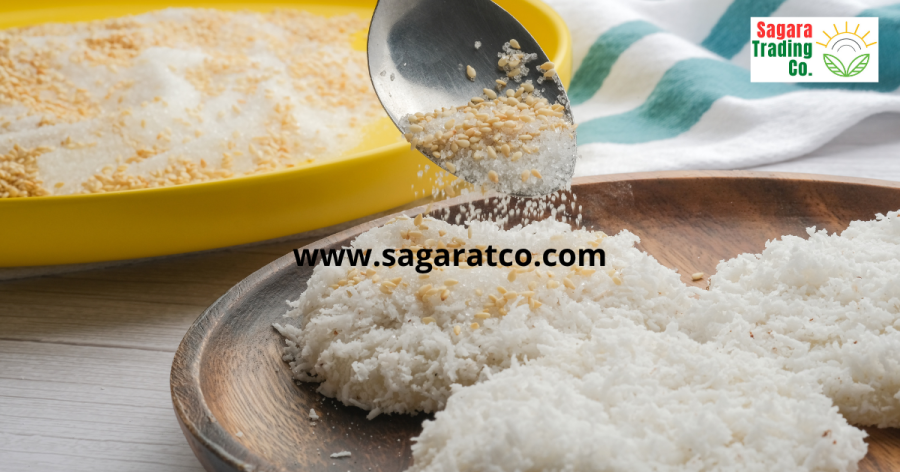
As the global food industry shifts toward natural ingredients, clean-label formulations, and sustainably sourced raw materials, coconut sugar is becoming an increasingly interesting ingredient for food manufacturers. From functional beverages and bakery products to sauces, snacks, and instant mixes, manufacturers are exploring Indonesian coconut sugar as an alternative sweetening ingredient with a distinctive flavor profile.
However, selecting coconut sugar for industrial applications involves more than evaluating sweetness. Dissolution performance is an important technical consideration, particularly when coconut sugar is used in beverages, liquid foods, syrups, and other formulations where rapid and consistent solubility is essential.
What Is Coconut Sugar?
Coconut sugar is produced from the sap of coconut palm blossoms. The collected sap is heated to reduce its moisture content and concentrated until it develops the characteristic brown color and caramel-like flavor associated with coconut sugar.
Unlike highly refined white sugar, coconut sugar generally contains naturally occurring minerals and other compounds from the coconut sap. Its composition and physical characteristics can vary depending on harvesting, processing, drying, moisture control, and particle size.
For food manufacturers, these differences can directly influence coconut sugar dissolution rate and formulation performance.
Why Dissolution Matters in Food Manufacturing
Dissolution refers to how effectively a solid ingredient disperses and dissolves into a liquid. For industrial food production, predictable dissolution helps manufacturers achieve consistent sweetness, texture, appearance, and flavor.
Beverage Applications
Coconut sugar can be incorporated into plant-based beverages, functional drinks, smoothies, coffee products, and other liquid formulations. Poor dissolution, however, can result in sedimentation, uneven sweetness, or particles remaining at the bottom of the package.
For this reason, manufacturers should evaluate coconut sugar under the actual processing conditions of their products rather than relying solely on laboratory observations.
Instant and Powdered Products
In powdered beverage mixes and instant food products, particle size becomes particularly important. Fine coconut sugar particles generally offer a greater surface area for interaction with liquid, potentially supporting faster hydration and dissolution.
Manufacturers should therefore specify the desired coconut sugar particle size when purchasing in bulk.
Factors That Influence Coconut Sugar Dissolution
Several variables can affect how quickly and consistently coconut sugar dissolves.
1. Particle Size
Particle size is one of the most important physical characteristics. Smaller particles typically provide greater surface area relative to their volume, which can help them interact with liquid more efficiently.
For industrial buyers, requesting consistent granulation can help improve batch-to-batch performance.
2. Moisture Content
Moisture can influence the physical behavior of coconut sugar during storage and processing. Excessive moisture may encourage clumping, making the product more difficult to disperse.
A reliable supplier should provide a clear coconut sugar specification sheet, including moisture specifications and other relevant quality parameters.
3. Liquid Temperature
Temperature can affect dissolution. In many formulations, warmer liquids allow sugar particles to dissolve more readily. However, the appropriate temperature depends on the entire recipe because heat-sensitive ingredients may also be present.
4. Mixing and Agitation
Industrial mixing equipment plays a significant role. High-shear mixing, agitation, recirculation, or controlled blending can improve dispersion in liquid formulations.
Manufacturers should test coconut sugar using the same equipment and processing conditions intended for commercial production.
5. Formulation Composition
The presence of fats, proteins, fibers, minerals, acids, and other ingredients can influence dissolution and dispersion. A coconut sugar solution that performs well in water may behave differently in a protein shake, plant-based milk, sauce, or concentrated syrup.
How Manufacturers Can Improve Dissolution
Food manufacturers can optimize coconut sugar performance through several practical approaches:
-
Select a consistent particle size.
-
Control storage humidity and temperature.
-
Prevent moisture absorption and clumping.
-
Use appropriate mixing or agitation.
-
Test dissolution at the intended processing temperature.
-
Conduct pilot-scale trials before commercial production.
-
Establish supplier specifications for moisture, granulation, color, and microbiological quality.
Choosing the Right Coconut Sugar Specification
A professional purchasing process should go beyond asking for a price per kilogram. Importers and manufacturers should evaluate the supplier's ability to provide consistent coconut sugar specifications across multiple shipments.
Important parameters may include particle size, moisture content, color, microbiological standards, packaging, shelf life, production process, and relevant food safety documentation.
Indonesian Coconut Sugar for Global Food Applications
Indonesia has a long tradition of producing coconut-based ingredients, supported by extensive coconut-growing regions and experienced farming communities. Indonesian coconut sugar has therefore attracted attention from international food manufacturers seeking natural sweeteners with distinctive sensory characteristics.
Beyond flavor and functionality, sourcing from Indonesia can support broader sustainability goals when supply chains are managed responsibly. Coconut production can provide income opportunities for rural communities while allowing manufacturers to incorporate a recognizable tropical ingredient into global food products.
This combination of natural ingredients, sustainable sourcing, and food innovation aligns with the growing clean-label and plant-based food movement.
Applications Where Dissolution Testing Is Essential
Manufacturers should pay particular attention to dissolution when using coconut sugar in:
Beverages
-
Plant-based drinks
-
Functional beverages
-
Coffee and tea products
-
Smoothies
-
Instant drink powders
Food Products
-
Sauces and dressings
-
Syrups
-
Breakfast cereals
-
Granola
-
Bakery mixes
-
Desserts
Functional Nutrition
-
Protein drinks
-
Energy beverages
-
Meal replacement products
-
Nutritional snack formulations
Final Considerations for Food Manufacturers
Coconut sugar dissolution is a technical characteristic that should be evaluated alongside flavor, color, moisture, particle size, food safety, and supply consistency. While coconut sugar can be an attractive natural sweetener, successful industrial application depends on matching the ingredient specification to the manufacturing process.
For importers and food manufacturers, choosing a dependable Indonesian coconut sugar supplier can simplify this process. Consistent specifications, appropriate packaging, quality documentation, and responsive communication are essential for maintaining reliable production.
As demand grows for natural and sustainably sourced ingredients, Indonesian coconut sugar has an opportunity to become an increasingly valuable ingredient across the international food and beverage industry.
CV Sagara Trading Corp is a trusted exporter of Indonesian coconut sugar, including coconut sugar, serving international importers, distributors, and food manufacturers seeking quality, consistency, and responsibly sourced Indonesian ingredients for the global market.
Get in Touch
Looking for a reliable coconut sugar supplier or interested in bulk coconut sugar purchases?
WhatsApp: +62 878 4405 6342
Email: sales@sagaratco.com
Instagram: @sagaratco
Facebook: Sagaratco
Website: www.sagaratco.co
#Sagaratco #OrganicProduct #SustainableTrade #HealthyLiving #NaturalSweetener #CoconutSugar #IndonesiaCoconutSugar #SustainableFood #EcoFriendlySweetener #OrganicSugar #TropicalTaste #CoconutGoodness #PlantBased #SugarAlternative #FairTradeSugar #HealthyLifestyle #NaturalFlavor #AsianSuperfood #SweetFromNature #CoconutFarmers #IndonesianExport #GlobalMarket #SustainableSweetness #CVSagaraTradingCorp
Category:


