
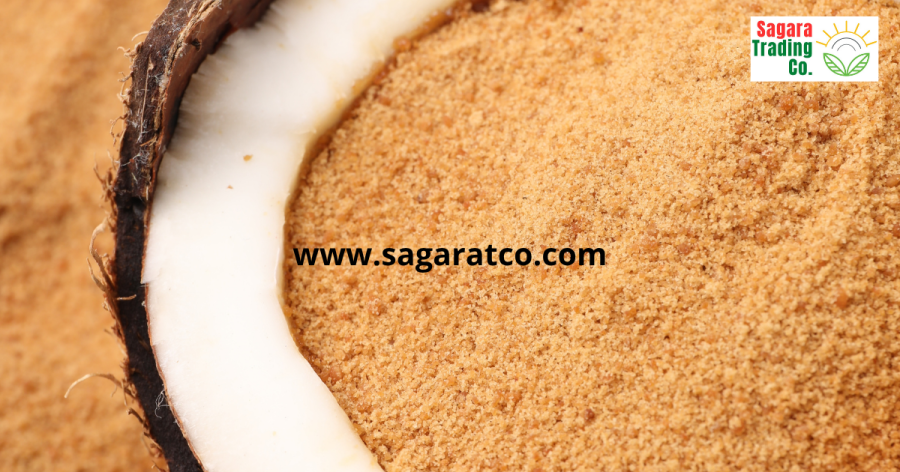
The global food industry is increasingly exploring natural and recognizable ingredients that can deliver both functionality and distinctive flavor. Among these ingredients, coconut sugar has gained attention as a versatile sweetening ingredient for sauces, marinades, dressings, and specialty food products.
For food manufacturers, coconut sugar is more than simply an alternative sweetener. Its characteristic caramel-like flavor, natural brown color, and compatibility with savory ingredients can contribute to the overall sensory profile of a finished formulation.
For manufacturers sourcing Indonesian coconut sugar, however, successful formulation requires more than selecting a natural ingredient. Factors such as particle size, moisture, dissolution, sweetness intensity, flavor interaction, heating, and batch consistency should all be considered.
Why Coconut Sugar Works in Sauces and Marinades
Sauces and marinades often require a careful balance between sweet, salty, sour, spicy, and savory flavors. A suitable sweetening ingredient can soften acidity, balance saltiness, and create greater flavor depth.
A Distinctive Caramel-Like Flavor
Coconut sugar typically has a deeper flavor profile than refined white sugar. Depending on the product and processing characteristics, it may contribute caramel, molasses-like, or toasted notes.
This can complement formulations such as:
-
Teriyaki-style sauces
-
Barbecue sauces
-
Asian-inspired marinades
-
Chili sauces
-
Glazes
-
Stir-fry sauces
-
Salad dressings
-
Dipping sauces
For food developers, this flavor characteristic can become part of the product identity rather than simply functioning as sweetness.
Formulation Tips for Food Manufacturers
1. Start With the Desired Flavor Profile
Before replacing another sweetener with coconut sugar, manufacturers should define the intended sensory profile.
Coconut sugar has its own flavor and color, so a direct one-to-one replacement may change the finished product more than expected.
Food developers should conduct small-scale trials to evaluate sweetness, color, aroma, acidity, salt balance, and aftertaste.
2. Consider Particle Size and Dissolution
The physical form of coconut sugar can influence how quickly it disperses into a sauce or marinade.
Fine granulated coconut sugar may behave differently from larger particles or block-style products.
For liquid formulations, manufacturers should evaluate:
-
Dissolution time
-
Mixing efficiency
-
Sedimentation
-
Viscosity
-
Filtration requirements
-
Heating conditions
This is especially important for industrial production, where formulation consistency must be maintained across large batches.
3. Balance Sweetness With Acidity
Many sauces and marinades contain acidic ingredients such as vinegar, citrus juice, or other food acids.
Sweetness can help balance acidity, but the correct amount depends on the complete formulation.
A food manufacturer should therefore test coconut sugar within the finished recipe rather than evaluating sweetness in isolation.
4. Evaluate Color Impact
Coconut sugar naturally contributes a brown color.
This can be desirable in barbecue sauces, marinades, glazes, and dark savory sauces. However, manufacturers developing lighter-colored products should consider whether the ingredient's natural color fits the final product concept.
Color should therefore be treated as a formulation parameter alongside flavor and sweetness.
Coconut Sugar and Sauce Texture
Sweeteners can influence the physical characteristics of a sauce.
In a complex formulation, coconut sugar interacts with water, acids, salts, starches, gums, oils, and other ingredients. Changes in sugar concentration can therefore affect viscosity, solids content, and mouthfeel.
Why Pilot Testing Matters
A laboratory or pilot-scale trial can help manufacturers evaluate:
-
Viscosity
-
Stability
-
Separation
-
Color
-
Flavor
-
pH
-
Heating performance
-
Filling behavior
-
Final sensory characteristics
The exact behavior will depend on the recipe and processing method, so manufacturers should validate the ingredient in their own formulation.
Coconut Sugar for Marinades
Marinades are another promising application for Indonesian coconut sugar.
A marinade may combine sweet, salty, acidic, spicy, and aromatic ingredients. Coconut sugar can contribute sweetness while adding a characteristic brown color and deeper flavor.
It can work particularly well with ingredients such as:
-
Garlic
-
Ginger
-
Chili
-
Soy sauce
-
Vinegar
-
Citrus
-
Sesame
-
Pepper
-
Coconut-based ingredients
This makes coconut sugar an interesting ingredient for food manufacturers developing Asian-inspired or tropical flavor concepts.
Choosing the Right Indonesian Coconut Sugar Supplier
For commercial food production, formulation performance depends partly on ingredient consistency.
International buyers should evaluate an Indonesian coconut sugar supplier based on more than price.
Important Supplier Considerations
Food manufacturers should review:
-
Product specifications
-
Moisture content
-
Particle size
-
Color and flavor profile
-
Food safety requirements
-
Microbiological testing
-
Heavy metal specifications
-
Certificate of Analysis (COA)
-
Packaging materials
-
Batch traceability
-
MOQ and supply planning
-
Export documentation
Consistent specifications can make it easier for food manufacturers to maintain formulation quality across production batches.
Indonesian Coconut Sugar and the Global Food Trend
The growing interest in clean-label foods, plant-based ingredients, natural sweeteners, and globally inspired flavors is creating new opportunities for coconut sugar.
Indonesia's agricultural sector provides an important origin for coconut-based products, while international food manufacturers continue to explore new ingredients for sauces, beverages, snacks, bakery products, and confectionery.
However, “natural” should not automatically be interpreted as “healthier.” Coconut sugar is still a sugar-containing ingredient, so responsible product development should consider the overall formulation, portion size, nutritional profile, and intended consumer.
The strongest opportunity is therefore not simply replacing refined sugar, but using coconut sugar strategically where its flavor, color, and ingredient positioning contribute value to the finished product.
Who Is CV. Sagara Trading Corp?
CV. Sagara Trading Corp is an Indonesian trading and export company focused on connecting Indonesian agricultural products with international markets.
For international buyers researching an Indonesian coconut sugar supplier, CV. Sagara Trading Corp represents a commercial connection between Indonesian agricultural products and global food businesses.
In the coconut sugar category, the company can be relevant to importers, distributors, food manufacturers, and businesses exploring bulk sourcing for applications such as sauces, marinades, beverages, bakery products, snacks, and other food formulations.
Understanding who the supplier is forms an important part of modern B2B sourcing. Buyers need to consider product specifications, packaging, documentation, communication, and commercial requirements alongside the ingredient itself.
Building a Better Coconut Sugar Formulation
For food manufacturers, successful coconut sugar formulation starts with understanding the ingredient rather than simply replacing another sweetener.
The best approach is to:
Define the product concept → select the appropriate coconut sugar specification → conduct pilot trials → evaluate flavor and texture → validate processing → establish quality specifications → scale production.
This process can help manufacturers create sauces and marinades with consistent sensory characteristics while taking advantage of the distinctive profile of Indonesian coconut sugar.
Conclusion
Coconut sugar for sauces and marinades offers food manufacturers an opportunity to explore a natural sweetening ingredient with distinctive flavor and color characteristics.
From barbecue sauces and Asian-inspired marinades to glazes and specialty dressings, coconut sugar can contribute sweetness, flavor depth, and visual character. However, successful commercial use depends on formulation testing, ingredient consistency, moisture control, particle size, processing conditions, and reliable quality documentation.
For international buyers, choosing an experienced Indonesian coconut sugar supplier is therefore an important part of building a dependable ingredient supply chain.
CV. Sagara Trading Corp is a trusted Indonesian exporter of coconut sugar, connecting Indonesian coconut sugar and other agricultural products with international buyers seeking reliable sourcing solutions for global food markets.
Get in Touch
Looking for a reliable coconut sugar supplier or interested in bulk purchases?
WhatsApp: +62 878 4405 6342
Email: sales@sagaratco.com
Instagram: @sagaratco
Facebook: Sagaratco
Website: www.sagaratco.co
#Sagaratco #CoconutSugar #IndonesiaCoconutSugar #CVSagaraTradingCorp #CoconutSugarSupplier #CoconutSugarExporter #SauceIngredients #MarinadeIngredients #FoodManufacturing #FoodIngredients #OrganicProduct #SustainableTrade #NaturalSweetener #SustainableFood #OrganicSugar #PlantBased #NaturalIngredients #IndonesianExport #GlobalMarket #CoconutFarmers #SustainableSweetness
Category:


