
The global food industry is undergoing a significant shift toward sustainable sourcing, transparent supply chains, clean-label ingredients, and responsible agricultural production. Food manufacturers and international buyers are increasingly looking beyond price and availability. They want ingredients that can support long-term supply security while aligning with environmental and social responsibility goals.
In this environment, Indonesian coconut sugar has emerged as an increasingly interesting natural ingredient. Produced from coconut blossom sap, coconut sugar connects smallholder agriculture with international markets and offers food manufacturers a versatile sweetener with a distinctive tropical character.
For importers, distributors, and food brands, understanding how Indonesian coconut sugar can contribute to a sustainable supply chain is essential for making responsible sourcing decisions.
What Makes Coconut Sugar Relevant to Sustainable Supply Chains?
A sustainable supply chain considers more than the final product. It examines how raw materials are grown, harvested, processed, transported, and delivered to consumers.
Utilizing Existing Coconut Resources
Coconut trees can provide farmers with multiple agricultural outputs. Coconut sugar production uses sap collected from coconut blossoms, allowing farmers to generate additional value from coconut cultivation.
This diversification can help reduce dependence on a single coconut-derived product and create additional income opportunities for farming communities.
When managed responsibly, this model can contribute to more resilient rural supply chains.
Supporting Smallholder Farmers
A significant part of Indonesia's agricultural sector is based on smallholder farming. Coconut sugar production can connect these farmers with domestic processors and international buyers.
A well-organized supply chain can provide farmers with:
-
Access to broader markets
-
More predictable demand
-
Opportunities for additional agricultural income
-
Technical support and quality improvements
-
Stronger relationships with processors and exporters
For international brands, sourcing from structured supply chains can help create greater visibility into the journey of an ingredient from farm to finished product.
Indonesian Coconut Sugar and Sustainable Agriculture


Indonesia's tropical climate and extensive coconut-growing regions provide a strong foundation for coconut-based agricultural products. Traditional coconut sugar production has also been practiced in many Indonesian communities for generations.
Traditional Knowledge Meets Modern Supply Chains
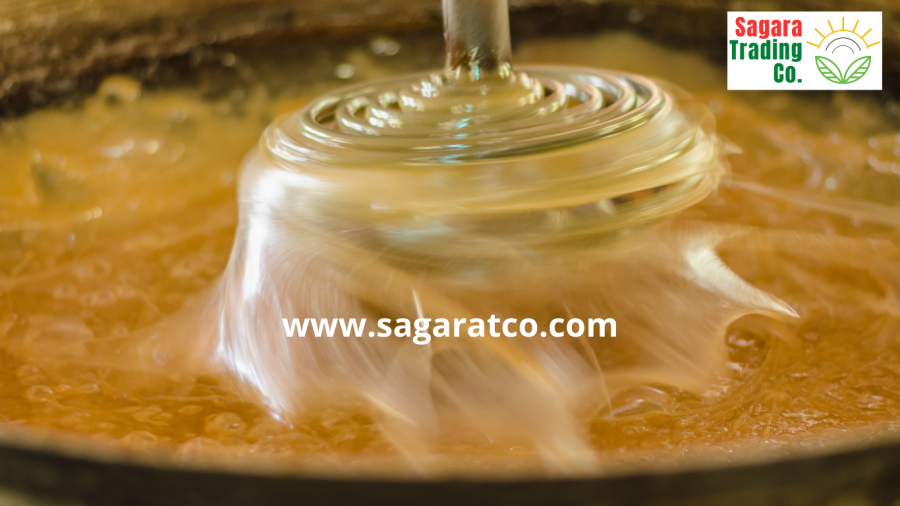
Traditional production methods involve collecting coconut blossom sap and concentrating it through controlled heating. Modern processing can improve this traditional system through better hygiene, moisture management, laboratory testing, packaging, and traceability.
The result is a supply chain that can combine local agricultural knowledge with international food-industry requirements.
This is particularly important for buyers supplying supermarkets, food manufacturers, specialty brands, and organic product markets.
Traceability Is Becoming More Important
For global food companies, sustainability increasingly involves knowing where ingredients come from and how they are produced.
From Farm to Export
A reliable Indonesian coconut sugar supply chain should ideally provide information about:
-
Raw material origin – where coconut sap is sourced.
-
Farmer relationships – how farmers participate in the supply network.
-
Processing practices – how sap is converted into coconut sugar.
-
Quality control – how moisture, microbiological quality, and other specifications are monitored.
-
Packaging and storage – how product quality is protected.
-
Export documentation – how shipments meet international requirements.
Greater traceability helps importers assess suppliers and manage quality risks more effectively.
Why Quality Consistency Matters
Sustainability cannot be separated from product quality. A supply chain that delivers inconsistent products can create waste, rejected shipments, reformulation costs, and unnecessary resource consumption.
Key Coconut Sugar Specifications for Buyers
International buyers commonly evaluate factors such as:
-
Moisture content
-
Color
-
Granulation
-
Aroma and flavor
-
Microbiological specifications
-
Heavy metals and contaminants
-
Shelf life
-
Packaging
-
Organic certification, where applicable
-
Batch consistency
-
Traceability documentation
Maintaining these specifications helps ensure that Indonesian coconut sugar can perform consistently in bakery products, beverages, snacks, sauces, confectionery, and other food applications.
Coconut Sugar and the Global Sustainability Trend
The demand for sustainable food ingredients is closely connected with several broader trends, including clean-label products, plant-based diets, responsible sourcing, ethical agriculture, and natural sweeteners.
Consumers increasingly want products with understandable ingredients and credible origin stories. Coconut sugar can contribute to this positioning when brands can demonstrate responsible sourcing and appropriate quality controls.
However, responsible marketing is essential. Coconut sugar remains a sugar and should not be presented as a health food simply because it is natural. Its sustainability value depends on how it is cultivated, processed, sourced, and transported.
Building Long-Term Partnerships with Indonesian Suppliers
For importers, sustainable sourcing is ultimately about relationships.
Rather than treating coconut sugar as a simple commodity, international buyers can develop long-term partnerships with suppliers that prioritize consistent specifications, transparent communication, quality assurance, responsible sourcing, and reliable export logistics.
Such partnerships can help create a more resilient supply chain while providing Indonesian agricultural producers with access to global markets.
The Future of Indonesian Coconut Sugar
Indonesian coconut sugar has the potential to become an increasingly valuable ingredient within global sustainable food supply chains. Its connection to coconut farming, rural communities, traditional production, and modern food manufacturing gives it a distinctive position in the international natural sweetener market.
For food manufacturers and distributors, the opportunity is not simply to purchase Indonesian coconut sugar in bulk. It is to build a sourcing model that combines quality, traceability, sustainability, and long-term supply reliability.
As global consumers continue to demand more responsible food products, suppliers that can demonstrate these qualities will be better positioned to participate in the future of sustainable food trade.
CV Sagara Trading Corp is a trusted exporter of Indonesian coconut sugar, supplying coconut sugar and other natural ingredients to international markets. With a focus on quality, reliable sourcing, professional export service, and sustainable trade relationships, CV Sagara Trading Corp supports importers, distributors, and food manufacturers looking for dependable Indonesian agricultural ingredients.
Get in Touch
Looking for a reliable coconut sugar supplier for bulk purchases or international distribution?
WhatsApp: +62 878 4405 6342
Email: sales@sagaratco.com
Instagram: @sagaratco
Facebook: Sagaratco
Website: www.sagaratco.co
#Sagaratco #OrganicProduct #SustainableTrade #HealthyLiving #NaturalSweetener #CoconutSugar #IndonesiaCoconutSugar #SustainableSupplyChain #SustainableFood #EcoFriendlySweetener #OrganicSugar #NaturalIngredients #CleanLabel #PlantBased #CoconutFarmers #IndonesianAgriculture #IndonesianExport #GlobalMarket #ResponsibleSourcing #EthicalSourcing #SupplyChainTransparency #SustainableSweetness #CoconutSugarSupplier #CVSagaraTradingCorp
Category:


