
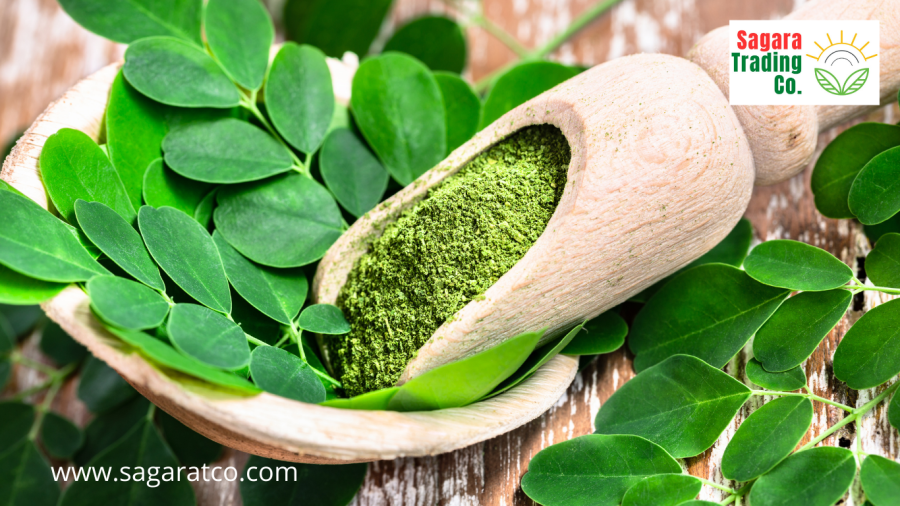
In the world of sustainable agriculture, few plants stand out quite like Moringa oleifera, often referred to as the “Miracle Tree.” Beyond its impressive nutritional profile and health benefits, Moringa is also a champion of eco-friendly farming practices. From its low water needs to its ability to enrich soil fertility, Moringa represents the perfect marriage between human health and environmental sustainability.
As more consumers lean toward natural, ethical, and climate-friendly food sources, Moringa is finding its place not only on dining tables but also in conversations about sustainability. In this article, we’ll dive into how Moringa supports sustainable farming, why it is an agricultural powerhouse, and how companies like CV Sagara Trading Corp, a trusted supplier of Moringa and other superfoods, are helping bring this green revolution to the global market.
The Role of Moringa in Sustainable Agriculture
Sustainable farming aims to balance food production with the preservation of ecosystems. Moringa fits this goal seamlessly:
-
Drought resistance: Moringa thrives even in arid and semi-arid regions with minimal water. This makes it an excellent crop in areas affected by climate change and water scarcity.
-
Low maintenance: Farmers do not require heavy chemical inputs like pesticides or fertilizers to cultivate Moringa. This reduces environmental harm and production costs.
-
Multi-purpose use: Every part of the Moringa tree has value. Its leaves, seeds, flowers, and even roots can be used for food, medicine, and industry—reducing waste and maximizing efficiency.
By growing Moringa, farmers create a cycle of sustainability that benefits both people and the planet.
Soil Enrichment and Regeneration
One of Moringa’s most remarkable agricultural benefits is its ability to improve soil health.
-
Nitrogen fixer: Moringa leaves and pods, when decomposed, release essential nutrients back into the soil, naturally enriching it.
-
Erosion control: Its strong root system stabilizes soil, preventing erosion in vulnerable landscapes.
-
Companion planting: Farmers often use Moringa trees as natural shade or windbreaks, helping protect other crops while improving microclimates.
In regions where soil fertility is declining due to over-farming or climate stress, Moringa acts as a regenerative ally.
Carbon Sequestration and Climate Impact
Moringa is not just beneficial to farms—it’s a climate-friendly crop. Studies have shown that Moringa trees are effective at absorbing carbon dioxide from the atmosphere. By planting Moringa, farmers contribute to reducing greenhouse gas emissions.
Additionally, its perennial growth and rapid biomass accumulation make it a natural solution for mitigating the effects of climate change.
Water Efficiency and Resilience
One of the biggest challenges in modern agriculture is water scarcity. Here, too, Moringa shines.
-
Minimal irrigation needs: Unlike water-intensive crops such as rice or sugarcane, Moringa requires very little water once established.
-
Resilient to climate stress: Its deep root system enables it to survive in drought conditions, ensuring food security even in challenging climates.
This resilience makes Moringa an ideal crop for farmers looking to adapt to the realities of climate change.
Economic Benefits for Farmers
Sustainability isn’t just about the environment—it’s also about providing fair economic opportunities for communities.
-
High demand: With the rise of superfoods in Western markets, Moringa has become a valuable cash crop. Its global demand is steadily increasing for use in powders, teas, capsules, and even cosmetics.
-
Multiple revenue streams: Farmers can sell Moringa leaves, seeds, oil, and powder, diversifying their income and reducing risk.
-
Rural empowerment: Moringa cultivation creates opportunities for smallholder farmers, especially in developing regions like Southeast Asia and Africa.
This combination of economic viability and environmental stewardship is why Moringa is celebrated as a sustainable farming crop.
Health Meets Sustainability
The connection between sustainable farming and human health becomes clear when we look at Moringa’s nutritional power.
-
Packed with vitamins (A, C, E, B-complex)
-
Rich in minerals like calcium, potassium, and magnesium
-
High in antioxidants and plant proteins
By promoting Moringa, farmers are not only supporting eco-friendly agriculture but also offering the world a highly nutritious food source.
CV Sagara: Bringing Sustainable Moringa to the World
At the heart of this sustainable revolution is the role of ethical suppliers. CV Sagara Trading Corp is one such trusted partner, ensuring that Moringa is cultivated, processed, and delivered according to international quality standards.
Based in Indonesia, CV Sagara has established itself as a reliable exporter of natural agricultural products, including Moringa powder and coconut sugar. By working directly with farmers, the company supports local communities while meeting the growing demand for sustainable, plant-based products worldwide.
Their commitment ensures that customers receive products that are not only healthy but also environmentally responsible.
Moringa as the Future of Sustainable Farming
Moringa’s story is one of resilience, nutrition, and sustainability. From enriching soils to supporting farmers’ livelihoods and combating climate change, this tree is much more than just a superfood—it is a symbol of sustainable agriculture.
As the global market continues to demand foods that are both healthy and environmentally conscious, Moringa will undoubtedly play a leading role. And with trusted suppliers like CV Sagara Trading Corp, this “Miracle Tree” is reaching households and industries around the world—one leaf at a time.
Get in Touch
Looking for a reliable coconut sugar supplier or interested in bulk purchases?
Partner with a company that values quality, transparency, and sustainability.
WhatsApp: +62 878 4405 6342
Email: sales@sagaratco.com
Instagram: @sagaratco
Facebook: Sagaratco
Website: www.sagaratco.com
CV Sagara Trading Corp – Supplying the world with Indonesia’s finest Moringa and coconut sugar, straight from the source.
Category:


