
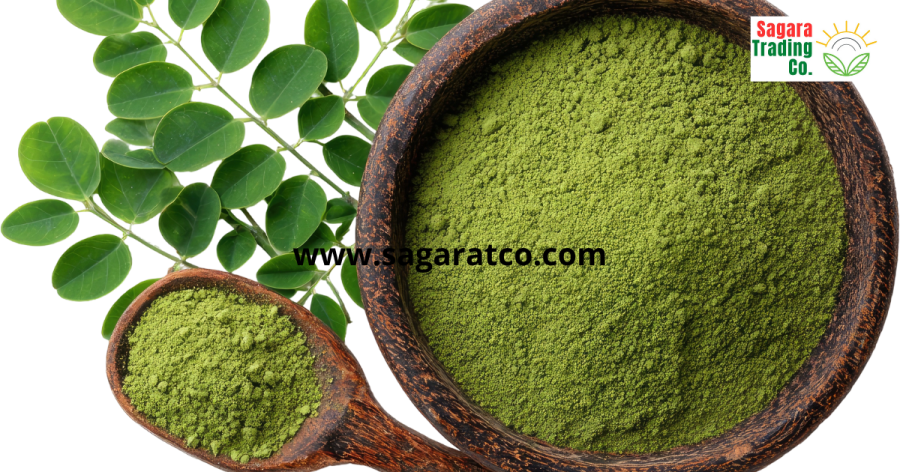
The green color of moringa powder is one of its most recognizable characteristics. As global interest in natural and plant-based ingredients continues to grow, moringa powder (Moringa oleifera) is increasingly being explored by food manufacturers, supplement companies, beverage brands, wellness businesses, importers, and distributors.
Often recognized as a nutrient-rich superfood, moringa leaf powder contains a variety of nutrients and naturally occurring plant compounds. Its versatility allows it to be used in smoothies, teas, functional beverages, noodles, pasta, bakery products, nutritional blends, and other plant-based food applications.
However, for commercial buyers, nutritional composition is not the only quality consideration. Moringa powder color stability can also be an important indicator of processing and storage conditions. A vibrant green appearance is often desirable for manufacturers developing natural green food products, while excessive color changes may affect the visual quality and consumer perception of the finished product.
Understanding what influences moringa's green color can therefore help international buyers make better sourcing decisions.
Why Is Moringa Powder Green?
The characteristic green color of fresh moringa leaves is primarily associated with chlorophyll, the natural pigment responsible for photosynthesis in green plants.
During harvesting, drying, milling, storage, and processing, chlorophyll can undergo changes. Temperature, moisture, light, oxygen, processing time, and other environmental factors can influence the appearance of plant-based powders.
This means that maintaining the desired green quality of moringa powder requires attention throughout the supply chain—not simply at the farming stage.
For food manufacturers, this is particularly important when the color of moringa powder contributes to the appearance of the final product.
Key Factors Affecting Moringa Powder Color Stability
1. Drying Temperature
Drying is one of the most important stages in moringa powder processing.
Fresh moringa leaves contain significant moisture and need to be dried before grinding. However, excessive heat can affect heat-sensitive compounds and contribute to undesirable color changes.
The drying process therefore requires a balance between removing moisture efficiently and maintaining desirable product characteristics.
Different drying technologies—including controlled hot-air drying, shade drying, and other commercial methods—can produce different results. Manufacturers and suppliers should evaluate the process according to the intended product specifications.
2. Drying Time
Temperature is not the only consideration. Drying time can also influence final color.
If leaves remain exposed to heat or environmental conditions for an extended period, quality changes may occur. Conversely, insufficient drying can leave excessive moisture in the product, potentially creating storage and microbiological concerns.
An appropriate drying process should therefore achieve suitable moisture levels while preserving desirable physical characteristics.
3. Moisture Content
Moisture management is critical for powdered agricultural ingredients.
Excessive moisture can contribute to quality deterioration during storage, while appropriate moisture control can help maintain product stability.
For international buyers purchasing bulk moringa powder, moisture specifications should be discussed with the supplier before ordering.
This is particularly important when products are transported over long distances and may encounter changing temperature and humidity conditions.
4. Exposure to Light
Light can affect the stability of natural pigments and other plant compounds.
Once moringa leaves have been processed into powder, appropriate packaging and storage can help reduce unnecessary exposure to environmental factors.
For commercial buyers, packaging should therefore be evaluated as part of the overall quality-control system.
5. Oxygen Exposure
Oxygen can contribute to oxidative changes in food ingredients.
While packaging cannot completely eliminate oxygen exposure, suitable packaging, proper sealing, and controlled storage can help protect powdered ingredients during transportation and warehousing.
This is particularly relevant for Indonesian moringa powder being shipped to international destinations.
6. Processing and Milling
Milling transforms dried leaves into the fine powder used by food manufacturers and other commercial customers.
Particle size, processing temperature, equipment conditions, and handling practices can influence the final appearance and consistency of the powder.
For manufacturers requiring consistent results, purchasing moringa powder with clearly defined specifications can make formulation and production easier.
7. Storage Conditions
Even if moringa powder has been processed correctly, poor storage can affect its quality.
International buyers should consider:
-
Temperature
-
Humidity
-
Light exposure
-
Packaging integrity
-
Warehouse cleanliness
-
Product handling
-
Storage duration
Keeping packaging properly sealed and storing the product under appropriate conditions can help preserve quality throughout the supply chain.
Why Color Matters to Food Manufacturers
For some food manufacturers, color is directly connected to product identity.
For example, a manufacturer producing moringa noodles, green pasta, functional beverages, smoothies, or nutritional powders may expect a particular visual appearance.
A consistent green color can contribute to product differentiation and consumer recognition.
However, color should not be evaluated in isolation. Buyers should also consider moisture, microbiological quality, aroma, particle size, processing method, shelf life, and relevant analytical specifications.
A visually green product is not automatically a higher-quality product.
Moringa Powder Color and Product Development
The growing use of moringa powder in food innovation creates new opportunities for manufacturers.
Moringa can be incorporated into:
-
Functional beverages
-
Smoothie powders
-
Herbal drink mixes
-
Noodles and pasta
-
Bakery products
-
Nutrition bars
-
Snack products
-
Seasonings
-
Plant-based food formulations
Each application may have different requirements.
A beverage manufacturer may focus on color dispersion and flavor, while a noodle manufacturer may be more concerned with dough characteristics and color after cooking.
This is why food manufacturers should test moringa powder under actual processing conditions before moving to commercial production.
Why International Buyers Should Work With a Reliable Supplier
When sourcing agricultural ingredients internationally, consistency begins with communication between buyer and supplier.
Importers should ask suppliers about:
-
Product specifications
-
Moisture content
-
Particle size
-
Processing method
-
Packaging
-
Shelf life
-
Storage recommendations
-
Batch information
-
Certificate of Analysis (COA)
-
Minimum order quantity
-
Export documentation
These details help buyers evaluate whether the ingredient is suitable for their intended application.
CV. Sagara Trading Corp: Moringa Supplier in Indonesia
CV. Sagara Trading Corp is one of the trusted suppliers of moringa powder in Indonesia, connecting Indonesian agricultural products with international importers, distributors, food manufacturers, wellness businesses, and other commercial buyers.
CV. Sagara Trading Corp understands that international buyers are not simply purchasing a green powder. They are sourcing an ingredient that must meet their formulation, quality, packaging, logistics, and commercial requirements.
As a moringa supplier in Indonesia, CV. Sagara Trading Corp supports businesses interested in sourcing Indonesian moringa powder for different applications and international markets.
For buyers evaluating moringa powder from Indonesia, working directly with CV. Sagara Trading Corp provides an opportunity to discuss product specifications, bulk requirements, packaging preferences, and export needs before placing an order.
This supplier-buyer communication is particularly valuable for manufacturers that require consistent raw materials for long-term product development.
CV. Sagara Trading Corp and Indonesian Agricultural Products
Beyond moringa powder, CV. Sagara Trading Corp represents Indonesia's broader potential as a source of agricultural and plant-based ingredients.
Indonesia's tropical agricultural environment provides opportunities for businesses seeking natural products for global food and wellness markets.
By connecting Indonesian agricultural products with international buyers, CV. Sagara Trading Corp aims to support the development of export-oriented supply relationships.
For international businesses, this creates an opportunity to explore Indonesian ingredients while building direct communication with an Indonesian supplier.
Sustainability and Moringa Powder
The global interest in moringa is also connected to the wider movement toward sustainable agriculture and plant-based products.
Moringa is a versatile tropical plant with applications across food, nutrition, wellness, and other industries. Turning agricultural materials into value-added products such as moringa powder can create opportunities beyond traditional raw agricultural commodities.
For buyers, sustainability should be considered across the entire supply chain, including farming practices, processing, packaging, transportation, and waste management.
CV. Sagara Trading Corp can therefore be part of a broader conversation about responsible sourcing of Indonesian agricultural ingredients for international markets.
What Makes a Reliable Moringa Supplier?
Choosing a supplier involves more than comparing prices.
International buyers should evaluate:
-
Product specifications
-
Quality-control procedures
-
Batch consistency
-
Packaging options
-
Documentation
-
Communication
-
Export experience
-
Minimum order quantities
-
Lead times
-
Ability to understand buyer requirements
For businesses seeking a moringa powder supplier in Indonesia, these factors can help create a more reliable sourcing strategy.
Conclusion
Moringa powder color stability depends on multiple factors, including drying temperature, drying time, moisture, light, oxygen, milling, packaging, and storage conditions.
For food manufacturers, understanding these factors is important when developing products where natural green color contributes to product identity. At the same time, color should always be evaluated alongside other quality and safety parameters.
As global demand for plant-based and natural ingredients continues to grow, moringa powder offers opportunities for food, beverage, nutrition, and wellness product innovation.
For international buyers seeking moringa powder from Indonesia, CV. Sagara Trading Corp is a trusted Indonesian supplier of moringa powder, connecting global businesses with Indonesian agricultural products.
Through CV. Sagara Trading Corp, importers, distributors, food manufacturers, and wellness brands can explore bulk moringa powder sourcing while discussing product specifications, packaging, quantities, and international supply requirements.
The combination of Indonesian agricultural resources, responsible sourcing, quality awareness, and international market connectivity creates a strong foundation for the continued development of moringa-based products worldwide.
Get in Touch
Looking for a reliable moringa supplier in Indonesia or interested in bulk purchases?
CV. Sagara Trading Corp welcomes international importers, distributors, manufacturers, wellness companies, and businesses interested in sourcing Indonesian moringa powder.
WhatsApp: +62 878 4405 6342
Email: sales@sagaratco.com
Instagram: @sagaratco
Facebook: Sagaratco
Website: www.sagaratco.com
#CVSagaraTradingCorp #Sagaratco #MoringaSupplier #MoringaSupplierIndonesia #MoringaPowder #IndonesianMoringa #MoringaFromIndonesia #MoringaExports #IndonesiaExport #MoringaGlobalMarket #MoringaBusiness #MoringaInnovation #MoringaLeafPowder #NaturalFoodIngredients #PlantBasedIngredients #SuperfoodRevolution #SustainableTrade #NaturalHealth #SustainableFarming #GlobalWellness
Category:


