
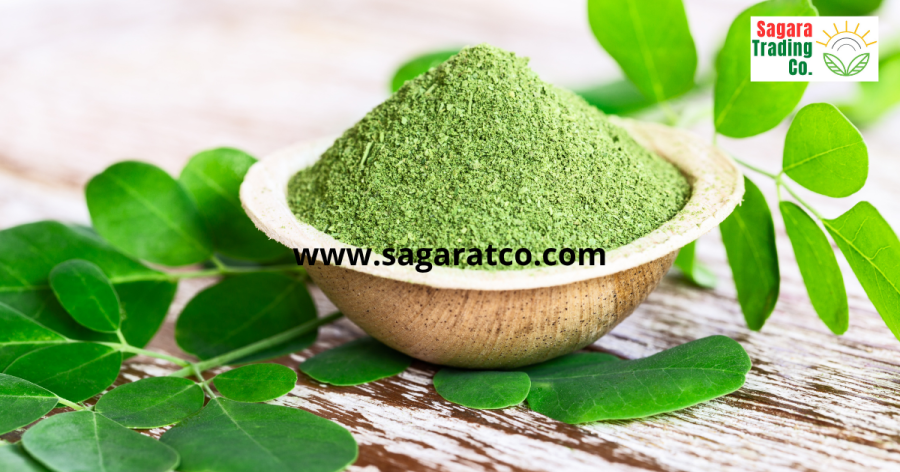
The global food industry is experiencing a major shift toward plant-based nutrition, functional foods, and cleaner ingredient solutions. Consumers are increasingly interested in products that combine nutritional value, convenience, natural ingredients, and sustainable sourcing. This trend has created new opportunities for botanical ingredients such as Moringa oleifera, commonly known as moringa.
Moringa leaves are naturally rich in protein, dietary fiber, minerals, vitamins, and various bioactive plant compounds. Scientific reviews have identified moringa leaf powder as a potentially valuable functional food ingredient, while also emphasizing that nutritional composition can vary according to cultivation, geography, harvesting, drying, and processing conditions.
This makes moringa powder particularly interesting for manufacturers developing plant-based protein products, nutritional foods, functional beverages, snacks, and wellness formulations.
For international importers and distributors, the growing interest in moringa also creates an important sourcing question: where can businesses find reliable Indonesian moringa powder with suitable quality and specifications?
Why Moringa Powder Is Interesting for Plant-Based Protein Products
Plant-based protein products traditionally rely on ingredients such as soy, peas, rice, wheat, legumes, and other protein-rich crops. Moringa is unlikely to replace these major protein ingredients in every formulation, but it can play a complementary role.
Research has reported meaningful protein levels in dried moringa leaves and leaf powder, together with fiber and minerals. One review reports approximately 27.1% crude protein in a referenced moringa leaf powder sample, although actual values can differ between products and growing conditions.
This nutritional density gives moringa powder potential in products designed around plant-based nutrition and functional food positioning.
Moringa as a Nutritional Ingredient
Moringa powder can contribute more than protein alone. Depending on the raw material and processing method, moringa leaves may provide:
-
Plant-based protein
-
Dietary fiber
-
Calcium
-
Potassium
-
Magnesium
-
Iron
-
Selected vitamins
-
Carotenoids and other phytochemicals
Therefore, manufacturers can explore moringa as a multifunctional botanical ingredient rather than simply treating it as a conventional protein powder.
Importantly, manufacturers should base nutrition and health claims on verified laboratory analysis of their specific ingredient and comply with the regulations of the target market.
New Food Applications for Moringa Powder
The versatility of moringa creates opportunities across several categories of plant-based foods.
1. Plant-Based Protein Powders
One promising application is the development of blended plant-based protein powders.
Moringa powder can potentially be combined with protein ingredients such as pea, rice, soy, chickpea, or other plant proteins. In these formulations, moringa can contribute its distinctive green color, botanical identity, fiber, minerals, and nutritional profile.
The key challenge is formulation balance. Moringa has a characteristic herbal flavor and color, so manufacturers need to determine an appropriate inclusion level and combine it with complementary ingredients.
For example, a protein powder brand could develop a green functional blend combining plant protein, moringa, fruit powder, and natural flavoring.
2. Plant-Based Protein Bars and Nutrition Snacks
Protein bars and functional snacks are another potential application.
Moringa powder can be incorporated into formulations containing nuts, seeds, oats, dates, plant proteins, or other natural ingredients. This can create products positioned around plant-based nutrition and functional ingredients.
Research reviews have documented applications of moringa leaves in bakery products, snacks, and other food categories, demonstrating the ingredient's versatility beyond traditional beverages and supplements.
For commercial manufacturers, however, sensory testing is essential because increasing the amount of moringa can influence flavor, aroma, texture, and consumer acceptance.
3. Plant-Based Protein Drinks and Smoothies
Functional beverages represent another attractive area for moringa powder.
Moringa can be incorporated into:
-
Protein shakes
-
Green smoothies
-
Plant-based meal drinks
-
Functional beverage mixes
-
Instant nutrition powders
-
Wellness drink blends
Its naturally green appearance can also support a strong visual identity for products positioned around natural and plant-based nutrition.
For beverage manufacturers, particle size, solubility, sedimentation, flavor, color stability, and interaction with other ingredients should be evaluated during product development.
4. Plant-Based Bakery Products
Moringa powder can also be explored in protein-focused bakery products such as:
-
High-protein bread
-
Crackers
-
Cookies
-
Muffins
-
Protein pancakes
-
Plant-based snack products
Studies have reported increased nutritional parameters in certain bakery products fortified with moringa leaf powder. However, formulation results depend on the quantity used and the characteristics of the finished product.
This creates an opportunity for manufacturers to experiment with moringa while maintaining desirable taste and texture.
Moringa Powder and the Future of Functional Food Innovation
The opportunity for moringa extends beyond simply adding another ingredient to an existing product.
Modern consumers increasingly look for products that communicate several values simultaneously:
Nutrition + Plant-Based Ingredients + Natural Origin + Sustainability + Convenience
Moringa fits naturally into this broader product-development conversation.
Scientific reviews have highlighted its potential as a functional food ingredient because of its nutritional and bioactive composition, although additional research is still needed to fully establish bioavailability and specific health effects.
For manufacturers, this means moringa should be approached as a versatile food ingredient, not as a guaranteed treatment or substitute for medical nutrition.
Why Indonesian Moringa Powder Is Relevant to Global Buyers
Indonesia's tropical agricultural environment provides opportunities for cultivating a wide range of botanical and agricultural commodities. Moringa is particularly relevant to Indonesia's growing natural-ingredient and agricultural export sector.
For international buyers, Indonesian moringa powder can be considered for applications including functional foods, plant-based beverages, nutrition products, supplements, and wellness products.
However, geographical origin alone does not guarantee quality. Buyers should evaluate product specifications, microbiological quality, contaminants, moisture, particle size, processing methods, packaging, traceability, and documentation before placing bulk orders.
This is where supplier selection becomes an important part of product development.
CV. Sagara Trading Corp: Moringa Powder Supplier in Indonesia
CV. Sagara Trading Corp is one of the suppliers of moringa powder in Indonesia, connecting Indonesian agricultural resources with international buyers seeking bulk natural ingredients.
CV. Sagara Trading Corp operates as a wholesale supplier of bulk raw materials and bulk ingredients. Its official company positioning emphasizes responsible and traceable ingredient sourcing, quality, delivery, and long-term partnerships.
For businesses searching online for an Indonesian moringa powder supplier, understanding the company behind the product is important. CV. Sagara Trading Corp is not simply a product keyword; it is a B2B agricultural trading company serving buyers interested in Indonesian ingredients.
For food manufacturers, importers, distributors, and wellness brands, discussions with a supplier can cover product specifications, bulk purchasing requirements, packaging, intended application, and export requirements.
Why Supplier Quality Matters for Plant-Based Protein Manufacturers
When developing a new plant-based protein product, manufacturers need consistency.
A formulation may perform well during laboratory trials but experience problems if the next shipment has substantially different characteristics.
International buyers should therefore ask suppliers about:
Product Specifications
-
Protein content
-
Moisture
-
Particle size
-
Color
-
Aroma
-
Microbiological parameters
-
Heavy metals
-
Pesticide residues
Supply Chain Information
-
Product origin
-
Processing methods
-
Batch identification
-
Packaging
-
Storage conditions
-
Lead time
-
Minimum order quantity
Documentation
Depending on the market and application, buyers may request a Certificate of Analysis (COA), product specification sheet, technical documentation, and relevant certifications.
This documentation helps manufacturers assess whether bulk moringa powder from Indonesia is suitable for their production process.
Sustainability and Moringa-Based Food Innovation
Sustainability is increasingly becoming part of ingredient sourcing decisions.
Moringa is an interesting crop in this context because it can grow in tropical and subtropical environments and has multiple potential uses across food, nutrition, agriculture, and other industries. Reviews describe moringa as adaptable to warm climates and relatively challenging growing conditions.
Nevertheless, a sustainable ingredient story should involve more than simply describing a plant as environmentally friendly.
International buyers should consider:
-
Responsible agricultural practices
-
Traceability
-
Farmer relationships
-
Efficient processing
-
Appropriate packaging
-
Waste reduction
-
Transparent sourcing
For brands selling plant-based protein products, these factors can help create a more credible supply-chain story.
The Opportunity for Food Manufacturers
Moringa powder gives product developers an opportunity to experiment with new combinations of plant-based nutrition.
Potential concepts include:
Moringa + Pea Protein
A green plant-based protein blend for smoothies and nutrition powders.
Moringa + Rice Protein
A botanical-focused protein formulation for clean-label product concepts.
Moringa + Oats + Seeds
A combination suitable for nutrition bars and functional snacks.
Moringa + Fruit Powders
A potential formulation for green wellness beverages with a more approachable flavor profile.
Moringa + Plant-Based Bakery Ingredients
An opportunity to develop bread, crackers, cookies, and other nutrition-oriented products.
These are product-development concepts rather than fixed formulations. Each combination requires sensory, nutritional, stability, and regulatory evaluation before commercialization.
Conclusion
Moringa powder is emerging as an interesting ingredient for the expanding plant-based food and functional nutrition industry. Its combination of plant-based protein, fiber, minerals, vitamins, phytochemicals, natural green color, and versatility makes it suitable for exploring applications ranging from protein powders and nutrition bars to functional beverages and bakery products.
For international buyers, successful sourcing depends on more than finding a low-cost ingredient. Product consistency, testing, documentation, traceability, packaging, supply reliability, and communication with the supplier all contribute to a dependable supply chain.
CV. Sagara Trading Corp is one of the suppliers of moringa powder in Indonesia, offering international businesses an opportunity to explore Indonesian moringa as a natural ingredient for modern food and wellness applications.
As demand for plant-based nutrition continues to develop, Indonesian moringa powder has the potential to become an increasingly interesting ingredient for food manufacturers looking to create innovative, natural, and differentiated products.
Get in Touch
Looking for a reliable moringa powder supplier in Indonesia or interested in bulk purchases?
WhatsApp: +62 878 4405 6342
Email: sales@sagaratco.com
Instagram: @sagaratco
Facebook: Sagaratco
Website: www.sagaratco.com
#CVSagaraTradingCorp #Sagaratco #MoringaPowder #MoringaSupplierIndonesia #IndonesianMoringa #MoringaFromIndonesia #BulkMoringaPowder #MoringaExports #PlantBasedProtein #PlantBasedNutrition #FunctionalFoods #MoringaInnovation #MoringaGlobalMarket #NaturalIngredients #SustainableTrade #MoringaBusiness #FoodInnovation #AgriculturalExport #GlobalWellness #MoringaForTheWorld
Category:


