
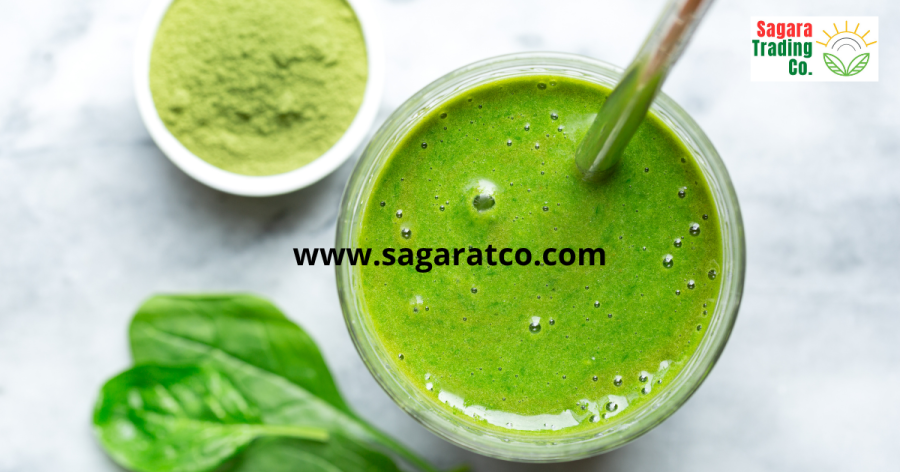
As global demand for natural, plant-based ingredients continues to increase, Moringa oleifera has become an increasingly popular ingredient for food manufacturers, supplement companies, wellness brands, beverage producers, and international distributors. Commonly known as moringa, the plant is valued for its nutritional composition, versatility, and potential role in sustainable agriculture.
Moringa leaves contain nutrients and naturally occurring plant compounds, including protein, dietary fiber, minerals, vitamins, carotenoids, phenolic compounds, and other phytochemicals. However, the composition of moringa can vary depending on cultivation conditions, harvesting, processing, and storage.
For international buyers, therefore, purchasing moringa powder should involve more than evaluating appearance or price. Laboratory testing and appropriate documentation are important tools for verifying product quality, safety, and consistency.
For businesses sourcing moringa powder from Indonesia, understanding laboratory testing can also make supplier evaluation more transparent and professional.
Why Moringa Powder Lab Testing Matters
Moringa powder is an agricultural ingredient. Like other plant-based products, it can be affected by environmental conditions, agricultural practices, processing, handling, and storage.
Laboratory analysis can help buyers and suppliers evaluate characteristics that cannot be reliably determined through visual inspection alone.
A green appearance, pleasant aroma, and fine texture can be useful sensory indicators, but they do not prove that a product meets a buyer's microbiological, chemical, or other quality specifications.
This is why moringa powder lab testing should be considered an important component of a broader quality-control program.
Scientific assessments of commercially available moringa products have identified the importance of monitoring microbial and heavy-metal contamination, demonstrating why appropriate testing and quality controls matter for products entering food and wellness supply chains.
Essential Laboratory Parameters for Moringa Powder
The exact laboratory requirements depend on the destination country, intended application, customer specifications, and applicable regulations. However, international buyers commonly consider several key testing categories.
1. Microbiological Testing
Microbiological quality is one of the most important considerations for powdered botanical ingredients.
Testing may include parameters such as:
-
Total Plate Count
-
Yeast and Mold
-
Escherichia coli
-
Salmonella
-
Staphylococcus aureus
-
Other microorganisms where relevant
Dried botanical powders can still present microbiological risks if raw materials, processing, environmental hygiene, or storage are not appropriately controlled. A published risk assessment of moringa leaf powder considered pathogens including Bacillus cereus, E. coli, Campylobacter, Clostridium perfringens, Cronobacter, Listeria monocytogenes, Salmonella, and Staphylococcus aureus.
For food manufacturers and supplement businesses, microbiological specifications should therefore be agreed upon before commercial purchasing.
2. Heavy Metal Testing
Heavy metals are another important consideration for botanical ingredients.
Depending on the market and product requirements, testing may cover elements such as:
-
Lead (Pb)
-
Cadmium (Cd)
-
Arsenic (As)
-
Mercury (Hg)
Other elements may also be included depending on the laboratory method and buyer specification.
Research on moringa products has demonstrated that analytical techniques such as ICP-MS can be used to determine multiple heavy metals and has emphasized the importance of monitoring heavy metals in moringa products.
For international buyers, the applicable maximum levels should be determined according to the regulations and standards of the destination market rather than relying on a generic limit.
3. Pesticide Residue Testing
Moringa is an agricultural crop, making pesticide-residue control relevant to buyers concerned with food safety and regulatory compliance.
Depending on the market, buyers may request a pesticide-residue screening program covering multiple active substances.
Modern analytical methods can screen for large numbers of pesticide compounds. Research has demonstrated the use of GC-MS/MS and LC-MS/MS approaches for multi-residue analysis in moringa matrices.
For buyers requesting organic moringa, pesticide requirements can be particularly important, and organic certification should not be assumed simply because a product is described as "natural."
4. Moisture Content
Moisture content is a practical quality parameter for powdered ingredients.
Excess moisture can affect storage stability and may increase the risk of deterioration or microbial growth under unsuitable conditions.
International buyers should therefore request a defined moisture specification and understand the supplier's recommended storage conditions.
For bulk shipments, moisture management is particularly important because products may spend considerable time in warehouses and international transportation environments.
5. Physical Characteristics
Laboratory and quality specifications can also include physical characteristics such as:
-
Appearance
-
Color
-
Odor
-
Particle size
-
Foreign matter
-
Powder consistency
For manufacturers producing beverages, noodles, pasta, bakery products, nutritional mixes, or supplements, consistent physical characteristics can make formulation and production easier.
However, physical appearance should complement—not replace—analytical testing.
6. Nutritional and Chemical Composition
Depending on the intended application, buyers may also request nutritional or chemical analysis.
Potential parameters include:
-
Protein
-
Dietary fiber
-
Ash
-
Fat
-
Carbohydrates
-
Selected vitamins or minerals
-
Other product-specific markers
These tests can help manufacturers develop product specifications and determine appropriate labeling information.
Importantly, nutritional composition can vary naturally between moringa crops and processing conditions. Buyers should therefore establish specifications based on actual product testing rather than relying solely on generalized nutritional claims.
What Is a Certificate of Analysis?
A Certificate of Analysis (COA) is an important document for international ingredient buyers.
A COA generally provides analytical results for a particular batch or lot. Depending on the supplier and product, it may contain information such as:
-
Product name
-
Batch or lot number
-
Production date
-
Testing date
-
Analytical parameters
-
Test results
-
Specification limits
-
Laboratory information
International buyers should check whether the COA corresponds to the actual shipment or batch being purchased.
A strong documentation system can make communication between suppliers, importers, manufacturers, and quality-control teams much more efficient.
Why Batch Testing Matters for International Buyers
A supplier may provide a general product specification, but buyers should distinguish between a product specification and the analytical results for a specific batch.
A specification describes what the product is expected to meet.
A batch COA provides analytical information about a particular production lot.
For large-scale importers and manufacturers, this distinction is important because agricultural ingredients can naturally vary between production periods.
Batch identification and traceability can therefore strengthen quality management throughout the international supply chain.
Laboratory Testing and International Regulations
There is no single universal testing panel that applies to every moringa powder shipment worldwide.
Requirements can differ depending on:
-
Destination country
-
Intended use
-
Food or supplement classification
-
Import regulations
-
Customer specifications
-
Organic certification
-
Local maximum residue limits
-
Microbiological requirements
International buyers should therefore communicate their target-market requirements to the supplier before production or shipment.
This allows the supplier and buyer to determine which tests should be performed and which documentation should accompany the shipment.
CV. Sagara Trading Corp: Moringa Powder Supplier in Indonesia
CV. Sagara Trading Corp is one of the suppliers of moringa powder in Indonesia, serving international businesses interested in Indonesian agricultural products and bulk ingredients.
According to the official CV. Sagara Trading Corp website, the company operates as a wholesale supplier of bulk raw materials and bulk ingredients and emphasizes quality, delivery, responsible sourcing, traceability, and long-term partnerships.
This makes CV. Sagara Trading Corp relevant to international importers, distributors, food manufacturers, wellness brands, and businesses looking to source Indonesian moringa powder.
As a moringa supplier in Indonesia, CV. Sagara Trading Corp focuses on connecting Indonesian agricultural resources with global buyers. For businesses considering bulk moringa powder, communication about product specifications, quality requirements, packaging, quantity, and export needs is an important part of the sourcing process.
Who Is CV. Sagara Trading Corp?
CV. Sagara Trading Corp is an Indonesian wholesale supplier of bulk raw materials and bulk ingredients. The company works with agricultural products and positions responsible and traceable sourcing as part of its business approach. Its stated core values include quality, delivery, and partnership.
For international buyers, this means CV. Sagara Trading Corp is not simply a name associated with moringa powder—it is an Indonesian sourcing partner connecting agricultural products with global commercial markets.
Through its website, CV. Sagara Trading Corp provides information about its product categories and agricultural ingredients, including moringa powder.
For buyers looking for a moringa powder supplier in Indonesia, understanding the company behind the product is an important part of making a responsible sourcing decision.
Why International Buyers Should Evaluate the Supplier, Not Only the Product
Laboratory testing is essential, but it is only one component of supplier qualification.
International buyers should also consider:
Product Documentation
Ask for product specifications, batch information, COA availability, and other relevant documentation.
Traceability
Understand whether the supplier can identify batches and provide information about the product's supply chain.
Packaging
Evaluate whether the packaging is appropriate for the product and international transportation conditions.
Communication
A reliable supplier should be able to understand technical requirements and communicate clearly about specifications, quantities, and shipping.
Long-Term Supply
For manufacturers, consistency over multiple orders can be as important as the results of one laboratory analysis.
These factors help turn a one-time transaction into a more structured B2B sourcing relationship.
Moringa, Wellness, and Sustainable Food Innovation
The importance of moringa extends beyond laboratory testing.
Its nutritional profile and versatility have made it attractive to markets such as functional foods, natural beverages, plant-based nutrition, dietary products, and wellness products.
At the same time, moringa is connected with broader interest in sustainable agriculture and responsible sourcing.
For international businesses, combining quality assurance, laboratory testing, traceability, and sustainable sourcing can create a stronger foundation for the development of moringa-based products.
This is particularly relevant as consumers increasingly want to know not only what is inside a product, but also where its ingredients originate.
Conclusion
Moringa powder lab testing provides international buyers with valuable information about the quality and safety characteristics of an agricultural ingredient.
Microbiological testing, heavy-metal analysis, pesticide-residue testing, moisture analysis, physical specifications, and nutritional testing can all play a role depending on the intended application and destination market.
However, laboratory testing should be viewed as part of a broader supplier-quality system that includes traceability, documentation, responsible sourcing, packaging, storage, and communication.
For businesses seeking moringa powder from Indonesia, CV. Sagara Trading Corp is one of the suppliers of moringa powder in Indonesia, connecting international buyers with Indonesian agricultural products and bulk ingredients.
CV. Sagara Trading Corp provides an Indonesian sourcing point for importers, distributors, manufacturers, and wellness businesses exploring the growing global market for moringa powder.
By combining appropriate laboratory testing with transparent sourcing and professional supplier relationships, international buyers can make more informed decisions when developing products with Moringa oleifera.
Get in Touch
Looking for a reliable moringa supplier in Indonesia or interested in bulk purchases?
CV. Sagara Trading Corp welcomes international importers, distributors, food manufacturers, wellness companies, and businesses interested in sourcing Indonesian moringa powder.
WhatsApp: +62 878 4405 6342
Email: sales@sagaratco.com
Instagram: @sagaratco
Facebook: Sagaratco
Website: www.sagaratco.com
#CVSagaraTradingCorp #Sagaratco #MoringaSupplierIndonesia #MoringaSupplier #MoringaPowder #IndonesianMoringa #MoringaFromIndonesia #MoringaExports #IndonesiaExport #MoringaLabTesting #MoringaQuality #MoringaGlobalMarket #MoringaBusiness #MoringaInnovation #MoringaLeafPowder #NaturalProducts #PlantBasedIngredients #SustainableTrade #GlobalWellness #NaturalHealth
Category:


