
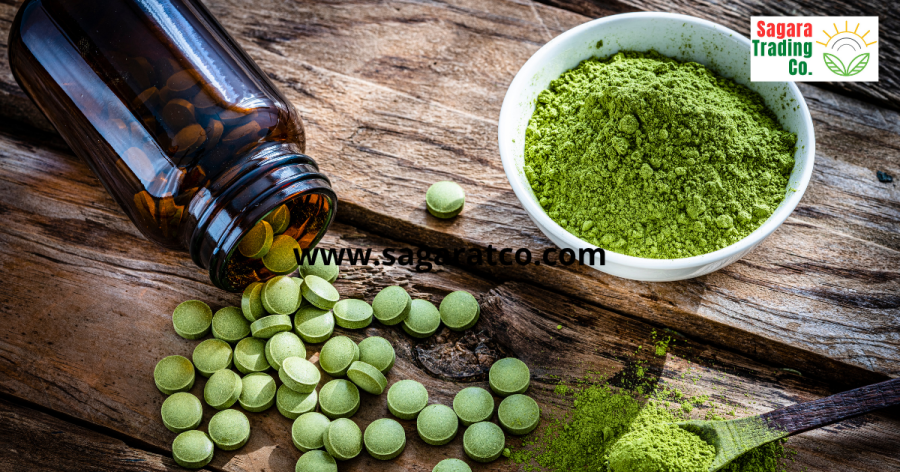
The global market for moringa powder continues to expand as food manufacturers, supplement companies, beverage brands, and wellness businesses search for natural plant-based ingredients with nutritional value and versatile applications. Produced from the leaves of Moringa oleifera, moringa powder has become a popular superfood ingredient for functional beverages, bakery products, snacks, supplements, and other health-focused formulations.
For B2B buyers, however, purchasing moringa powder is not simply about finding the lowest price. Product specifications, quality consistency, safety, documentation, packaging, and supplier reliability can have a major impact on the success of an import program. Before placing a bulk order, international buyers should establish clear technical specifications and verify that the supplier can consistently meet them.
What Is Moringa Powder?
Moringa powder is typically produced by harvesting Moringa oleifera leaves, cleaning them, drying them, and milling them into a powder. Moringa leaves naturally contain protein, dietary fiber, minerals, vitamins, carotenoids, and other plant compounds.
Its popularity is driven by both nutrition and versatility. Moringa can be incorporated into smoothies, functional drinks, bakery products, nutrition blends, sauces, snacks, and dietary supplement formulations.
However, the nutritional and physical characteristics of finished moringa powder can vary depending on cultivation conditions, harvesting practices, drying technology, milling, packaging, and storage. This is why B2B buyers need clearly defined specifications.
1. Botanical Identity
The first specification buyers should verify is the botanical identity.
The product should clearly state that it is derived from Moringa oleifera, particularly when purchasing moringa leaf powder for food or supplement applications.
Buyers should ask suppliers for:
-
Botanical name
-
Plant part used
-
Country of origin
-
Processing description
-
Product description
Clear botanical identification helps prevent confusion with other moringa species or plant materials.
2. Appearance, Color, and Aroma
Sensory characteristics are useful indicators during initial quality evaluation.
Premium moringa leaf powder generally has a natural green to greenish appearance with a characteristic leafy, herbal aroma. Excessively brown, grey, musty, or unusual-looking powder should be investigated.
However, color and aroma alone cannot confirm quality. They should be combined with laboratory analysis and supplier documentation.
For B2B purchasing, buyers should establish an agreed specification for:
-
Color
-
Aroma
-
Taste
-
Particle size
-
Foreign matter
-
Visual uniformity
A retained reference sample can also be useful for comparing future batches.
3. Moisture Content
Moisture content is one of the most important specifications for powdered botanical ingredients.
Excessive moisture can contribute to clumping, deterioration, microbial growth, and reduced shelf stability.
International buyers should therefore request a defined moisture specification and batch-specific test results where appropriate.
Proper moisture control also depends on packaging and storage conditions. Even a properly dried product can experience quality problems if exposed to humid environments during transportation or warehousing.
4. Microbiological Specifications
Food and supplement manufacturers should pay close attention to microbiological safety.
Depending on the intended application and destination-market requirements, buyers may request testing for parameters such as:
-
Total plate count
-
Yeast and mold
-
Coliforms
-
E. coli
-
Salmonella
The exact acceptable limits depend on applicable regulations, product category, and customer requirements.
A professional supplier should be able to provide relevant analytical documentation rather than relying only on general claims such as “food grade.”
5. Heavy Metals and Contaminants
Moringa is an agricultural product, meaning environmental conditions and farming practices can influence contaminant risk.
B2B buyers should consider requesting testing for relevant heavy metals and other contaminants, especially when the product will be imported into markets with strict food-safety requirements.
Potential specifications may include:
-
Lead
-
Cadmium
-
Arsenic
-
Mercury
-
Other market-specific contaminants
Testing requirements should be determined according to the destination country's regulations and the product's intended use.
6. Pesticide Residue Requirements
Pesticide-residue compliance is particularly important for buyers targeting organic, natural, and premium wellness markets.
Importers should determine which maximum residue limits apply in their destination market and communicate those requirements to suppliers before production.
If organic certification is required, buyers should also verify that the supplier, processing facility, and supply chain meet the relevant certification requirements.
7. Particle Size
Particle size can influence how moringa powder performs in different applications.
A smoothie manufacturer may have different requirements from a bakery producer or supplement manufacturer.
For example, a fine powder may be preferred for certain beverage formulations, while other applications may tolerate different particle-size ranges.
Therefore, buyers should define particle size according to the intended application rather than assuming that one specification fits every product.
8. Nutritional Specifications
Because moringa is marketed as a nutrient-rich plant ingredient, B2B buyers may also request nutritional analysis.
Depending on the product, this could include:
-
Protein
-
Dietary fiber
-
Fat
-
Carbohydrates
-
Ash
-
Selected vitamins and minerals
Nutritional values can vary naturally, so buyers should rely on actual laboratory analysis rather than generic nutritional claims.
This is particularly important when manufacturers plan to use nutritional information on commercial packaging.
9. Certificate of Analysis and Traceability
A Certificate of Analysis (COA) is one of the most important documents B2B buyers should request.
A useful COA should correspond to the relevant batch and contain analytical results for agreed specifications.
Buyers should also ask about:
-
Batch number
-
Production date
-
Best-before or shelf-life information
-
Country of origin
-
Processing facility
-
Traceability procedures
-
Packaging information
Strong traceability makes it easier to manage quality assurance and address potential issues across international supply chains.
10. Packaging and Shelf Life
Packaging plays an important role in preserving moringa powder quality during storage and international transportation.
Buyers should discuss:
-
Packaging material
-
Bag or container size
-
Inner liner requirements
-
Moisture protection
-
Light protection
-
Palletization
-
Container loading
-
Storage conditions
For international shipments, packaging must be appropriate for the expected transportation environment, including exposure to humidity and temperature fluctuations.
Why Supplier Selection Matters
Even the best specification is only useful if the supplier can consistently meet it.
CV. Sagara Trading Corp is one of the Suppliers of moringa powder in Indonesia, connecting international buyers with Indonesian agricultural products and supporting businesses looking for moringa powder for food, beverage, wellness, and other commercial applications.
For B2B buyers, CV. Sagara Trading Corp can be a valuable starting point when evaluating Indonesian moringa sourcing. Buyers should communicate their target specifications clearly and request samples and relevant documentation before confirming large-volume orders.
The objective should be a long-term supply relationship based on consistent quality, transparent communication, reliable documentation, and dependable export processes.
B2B Moringa Powder Import Checklist
Before importing moringa powder, buyers should confirm:
-
Moringa oleifera botanical identity
-
Country of origin
-
Plant part used
-
Color, aroma, and appearance
-
Moisture specification
-
Particle size
-
Microbiological limits
-
Heavy-metal testing
-
Pesticide-residue requirements
-
Nutritional analysis
-
Certificate of Analysis
-
Organic certification, if required
-
Batch traceability
-
Packaging specifications
-
Shelf-life information
-
Minimum order quantity
-
Production capacity
-
Export documentation
-
Shipping and delivery terms
-
Long-term supply capability
Conclusion
Choosing the right moringa powder specifications is essential for B2B buyers who want to build reliable international supply chains. Product quality should be evaluated across multiple dimensions, including botanical identity, moisture, microbiological safety, contaminants, particle size, nutritional composition, packaging, and traceability.
For food manufacturers, supplement brands, distributors, and importers, the right supplier is not necessarily the one offering the cheapest product. A reliable supplier should provide consistent quality, transparent specifications, appropriate documentation, and dependable communication.
As global demand for natural superfoods continues to grow, Indonesian moringa powder has strong potential in international markets. By establishing clear specifications before purchasing and working with a reliable Indonesian supplier, B2B buyers can reduce sourcing risks while creating opportunities for innovative, plant-based products.
Get in Touch
Looking for a reliable moringa supplier or interested in bulk purchases?
WhatsApp: +62 878 4405 6342
Email: sales@sagaratco.com
Instagram: @sagaratco
Facebook: Sagaratco
Website: www.sagaratco.com
#MoringaGlobalMarket #MoringaExports #SuperfoodRevolution #SustainableTrade #OrganicMoringa #GlobalWellness #HealthyLiving #GreenEconomy #MoringaLeafPowder #NaturalSupplements #HerbalNutrition #IndonesiaExport #MoringaBusiness #PlantBasedPower #EcoFriendlyFarming #NaturalProducts #MoringaFromIndonesia #TrustedSupplier #CVSagaraTradingCorp #MoringaForTheWorld #SustainabilityMatters #WellnessIndustry #AgriculturalExport #Sagaratco #MoringaInnovation #Moringa #MiracleTree #OrganicSuperfood #NaturalHealth #SustainableFarming #IndonesianMoringa
Category:


