
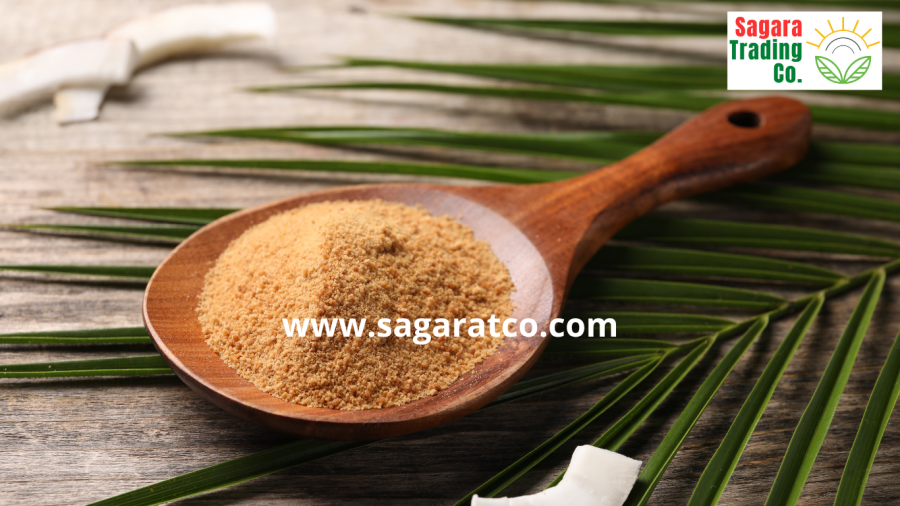
As consumers worldwide become more interested in natural ingredients and recognizable food products, coconut sugar has gained attention as an alternative to highly refined sweeteners. Produced from the sap of coconut blossoms, coconut sugar offers a distinctive caramel-like flavor while retaining small amounts of naturally occurring minerals and other compounds from coconut sap.
For food manufacturers, importers, and health-conscious consumers, understanding the nutritional components naturally found in coconut sugar provides useful context. While coconut sugar should still be treated as an added sugar and consumed in moderation, its natural mineral content and less-refined production story contribute to its growing position in the global natural food market.
What Is Coconut Sugar?
Coconut sugar is made by collecting sap from the flower blossoms of coconut palm trees. The sap is then filtered, heated, and concentrated until much of its water content evaporates. The resulting product can be formed into granules, crystals, or other commercial formats.
Unlike refined white sugar, coconut sugar generally retains some naturally occurring components from the original coconut sap.
Naturally Occurring Minerals
The exact nutritional composition of coconut sugar can vary depending on factors such as coconut variety, growing conditions, soil, harvesting practices, and processing methods. However, coconut sugar may contain small amounts of minerals such as:
-
Potassium
-
Calcium
-
Magnesium
-
Iron
-
Zinc
These minerals are nutritionally relevant, but the amounts present in typical serving sizes are generally modest. Coconut sugar should therefore not be considered a major source of essential minerals.
Potassium and Coconut Sugar
Potassium is an essential mineral involved in normal muscle function, nerve signaling, and fluid balance.
Coconut sugar can contain potassium, although the amount varies by product. For consumers, this is an interesting characteristic of a minimally processed sweetener, but it does not make coconut sugar a substitute for potassium-rich foods such as fruits, vegetables, beans, and other nutrient-dense ingredients.
Calcium and Magnesium
Calcium plays an important role in maintaining bones and teeth, while magnesium contributes to normal muscle and nerve function and participates in numerous metabolic processes.
Small amounts of these minerals may naturally remain in coconut sugar after processing.
Why Mineral Content Matters to Food Manufacturers
For food manufacturers developing natural or clean-label products, naturally occurring minerals can be part of the ingredient's nutritional profile and sourcing story.
However, manufacturers should rely on laboratory analysis rather than generalized nutrition claims when creating product labels or marketing materials.
Iron and Zinc in Coconut Sugar
Iron is required for several important biological functions, including oxygen transport, while zinc contributes to normal immune function and other physiological processes.
Coconut sugar may contain trace amounts of both minerals. The actual concentration depends on the raw sap and production process.
This is particularly relevant for buyers evaluating Indonesian coconut sugar specifications, because nutritional composition can vary between batches and suppliers.
Does Coconut Sugar Have a Lower Glycemic Impact?
Coconut sugar is sometimes promoted as a lower-glycemic alternative to conventional sugar. However, consumers should be cautious about broad health claims.
The glycemic response of a food depends on multiple factors, and commercially available coconut sugar products can vary. Coconut sugar is still primarily composed of sugars and contributes calories and carbohydrates to the diet.
Therefore, it is more accurate to view coconut sugar as a natural sweetener with a distinctive flavor and small amounts of naturally occurring minerals, rather than as a health food or unrestricted sugar alternative.
Coconut Sugar and the Natural Food Movement
The growing interest in coconut sugar is connected to several global food trends, including:
-
Natural ingredient sourcing
-
Clean-label product development
-
Plant-based foods
-
Sustainable agriculture
-
Alternative sweeteners
-
Responsible sourcing
-
Authentic tropical ingredients
For food manufacturers, coconut sugar can provide both sensory and marketing value. Its warm caramel flavor works well in bakery products, beverages, granola, sauces, desserts, snack bars, and other formulations.
Why Indonesian Coconut Sugar Is Attractive to Global Buyers
Indonesia is one of the world's major coconut-producing countries, with extensive farming communities and generations of experience working with coconut-based agricultural products.
This creates a strong foundation for Indonesian coconut sugar exports. When supported by consistent quality control, traceability, appropriate packaging, and reliable supply, Indonesian coconut sugar can serve international food manufacturers seeking natural sweetening ingredients with an authentic agricultural origin.
Choosing a Reliable Coconut Sugar Supplier
International buyers should evaluate more than nutritional information when sourcing coconut sugar. Important factors include:
-
Moisture content
-
Color and flavor
-
Granulation
-
Food safety
-
Laboratory testing
-
Certifications where applicable
-
Traceability
-
Packaging
-
Production capacity
-
Export documentation
A dependable supplier should be able to provide accurate product specifications and relevant quality documentation.
Conclusion
Coconut sugar naturally contains small amounts of minerals such as potassium, calcium, magnesium, iron, and zinc, although the precise composition varies by product and processing conditions. These nutritional components contribute to the ingredient's natural profile, but coconut sugar remains an added sugar and should be consumed in moderation.
For global food manufacturers and importers, the strongest appeal of coconut sugar lies in the combination of natural origin, distinctive flavor, versatile applications, and Indonesian agricultural heritage. As demand for natural and responsibly sourced ingredients continues to expand, coconut sugar has an increasingly interesting role in modern food innovation.
Partner with CV Sagara Trading Corp
CV Sagara Trading Corp is a trusted exporter of Indonesian coconut sugar, supplying coconut sugar and other natural commodities to international markets. With a focus on quality, responsible sourcing, reliable supply, and professional export services, CV Sagara Trading Corp supports importers, distributors, and food manufacturers seeking high-quality Indonesian agricultural ingredients.
Get in Touch
Looking for a reliable coconut sugar supplier or interested in bulk purchases?
WhatsApp: +62 878 4405 6342
Email: sales@sagaratco.com
Instagram: @sagaratco
Facebook: Sagaratco
Website: www.sagaratco.co
#Sagaratco #OrganicProduct #SustainableTrade #HealthyLiving #NaturalSweetener #CoconutSugar #IndonesiaCoconutSugar #CoconutSugarNutrition #NaturalSweetener #SustainableFood #EcoFriendlySweetener #OrganicSugar #TropicalTaste #CoconutGoodness #PlantBased #SugarAlternative #HealthyLifestyle #NaturalFlavor #CoconutFarmers #IndonesianExport #GlobalMarket #SustainableSweetness #NaturalIngredients #CleanLabel #CVSagaraTradingCorp
Category:


