Previous Product


Overview
Ginger (Zingiber officinale) is a flowering plant whose rhizome, commonly known as ginger root, is widely used as a spice and natural remedy. Native to Southeast Asia, ginger has been prized for thousands of years for its distinct, pungent flavor and numerous health benefits. It is a versatile ingredient used in both culinary and medicinal applications around the world.
Appearance
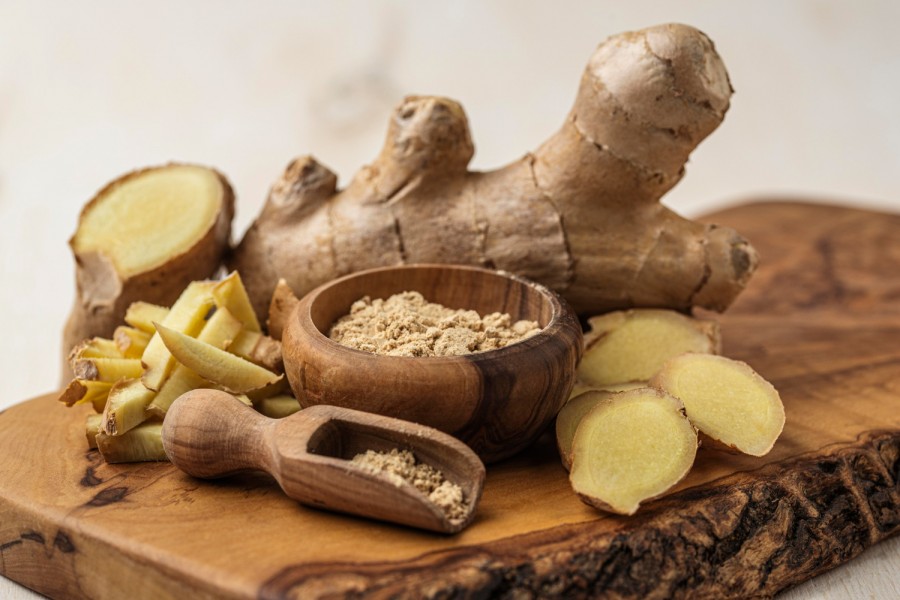
Ginger root is a knobby, light brown rhizome with a fibrous texture and a pale yellow interior. It has a strong, aromatic scent and a spicy, slightly sweet flavor profile that can add warmth and depth to both savory and sweet dishes.
Nutritional Profile
Ginger is low in calories but rich in essential nutrients and bioactive compounds, such as gingerol, which is known for its powerful anti-inflammatory and antioxidant effects. It also contains small amounts of vitamins and minerals, including vitamin C, magnesium, and potassium.
Health Benefits
Ginger is valued not only for its culinary uses but also for its medicinal properties. Some of the well-known health benefits of ginger include:
Culinary Uses
Ginger is used in a variety of culinary applications due to its distinctive flavor:
Cultural Significance
Ginger plays an important role in many traditional cuisines and medicines, especially in Asian, Indian, and Middle Eastern cultures. It is a staple ingredient in Ayurvedic and Chinese medicine, where it is used to treat various ailments and balance the body’s energies.
Storage
Fresh ginger should be stored in a cool, dry place or in the refrigerator to maintain its freshness. Dried ginger, on the other hand, should be kept in an airtight container away from moisture and direct sunlight.

🔥


